Safe Use of Power Tools: A Practical Guide for DIYers & Professionals
Power tools make construction, renovation, and DIY projects faster and more efficient—but they also introduce serious safety risks when used improperly. Whether you’re a seasoned contractor or a weekend hobbyist, following safe practices protects both you and those around you. This guide covers essential tips for handling power tools safely and confidently.
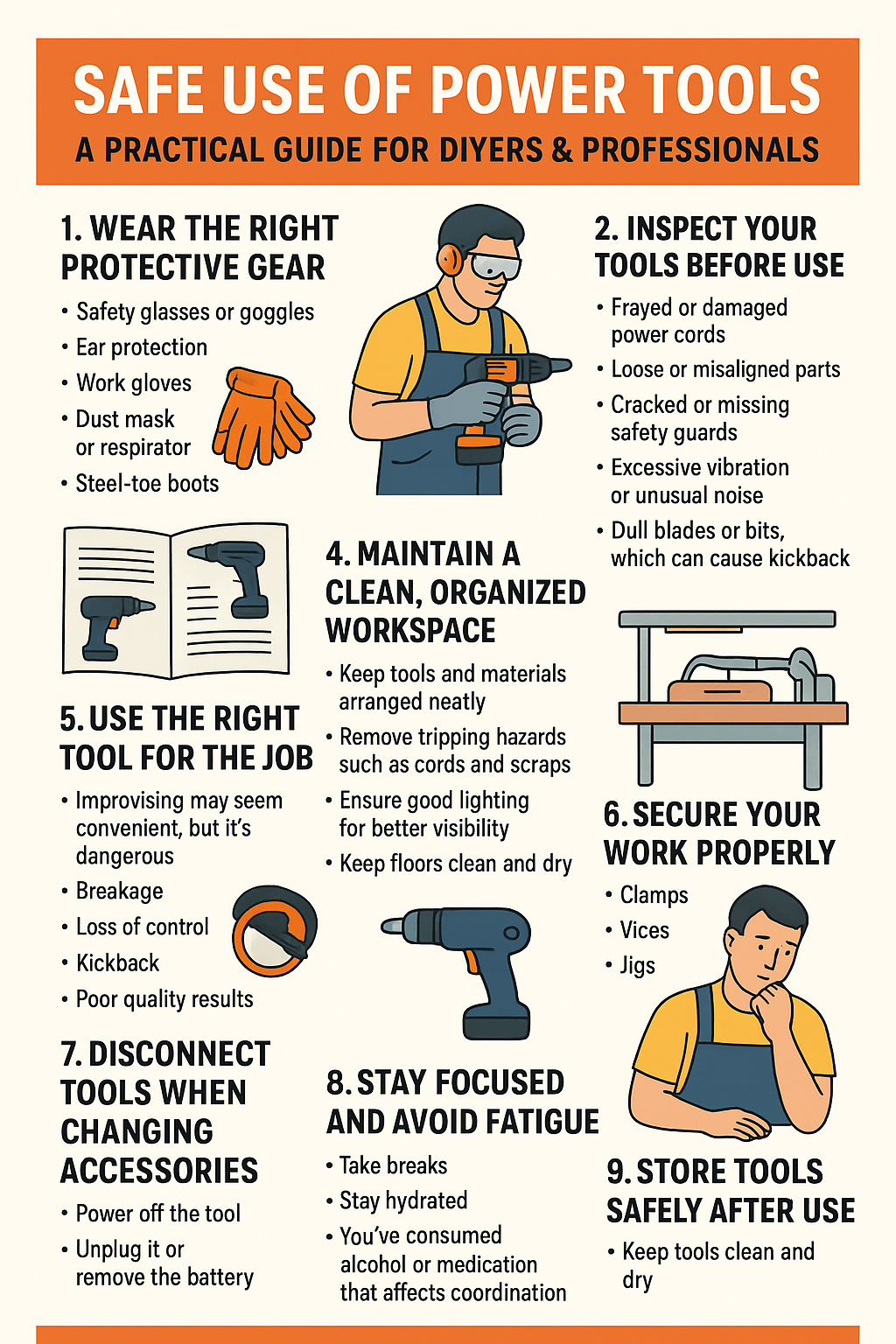
operating tools in safety guide
1. Wear the Right Protective Gear
Safety glasses or goggles to shield your eyes from flying debris
Ear protection such as earmuffs or plugs to prevent long-term hearing damage
Work gloves for improved grip and protection
Dust mask or respirator when sanding, cutting, or grinding
Steel-toe boots to protect your feet from accidental drops
Wearing the right gear doesn’t just minimize risk—it builds good habits that keep you safe over time.
2. Inspect Your Tools Before Use
A quick inspection can prevent major accidents. Check for:
Frayed or damaged power cords
Loose or misaligned parts
Cracked or missing safety guards
Excessive vibration or unusual noise
Dull blades or bits, which can cause kickback
If something looks or feels wrong, don’t use the tool until it’s repaired or replaced.
3. Read the Manual (Yes, Really!)
Every tool operates a little differently, and the manual provides crucial information such as:
Safe operating procedures
Maximum load or usage limits
Required accessories
Maintenance instructions
Taking a few minutes to understand how a tool is meant to work minimizes both mistakes and injuries.
4. Maintain a Clean, Organized Workspace
Cluttered work areas lead to accidents. Make sure to:
Keep tools and materials arranged neatly
Remove tripping hazards such as cords and scraps
Ensure good lighting for better visibility
Keep floors clean and dry
A tidy workspace improves focus and reduces the chance of mishaps.
5. Use the Right Tool for the Job
Improvising may seem convenient, but it’s dangerous. Using the wrong tool or accessory can lead to:
Breakage
Loss of control
Kickback
Poor quality results
Choose the proper tool and size of blade, bit, or disc every time.
6. Secure Your Work Properly
Never hold materials with your hand when you could use:
Clamps
Vices
Jigs
Workbenches
Stabilizing your work ensures cleaner cuts and prevents tools from slipping.
7. Disconnect Tools When Changing Accessories
Whether you're changing a blade, bit, or disc, always:
Power off the tool
Unplug it or remove the battery
Wait for all moving parts to stop
This simple step eliminates countless avoidable injuries.
8. Stay Focused and Avoid Fatigue
Fatigue plays a major role in workshop injuries. Take breaks, stay hydrated, and avoid working when:
You’re tired
You’re distracted
You’ve consumed alcohol or medication that affects coordination
Alert operators are safe operators.
9. Store Tools Safely After Use
Good storage habits protect both you and your tools:
Keep tools clean and dry
Store sharp accessories in secure containers
Hang tools or place them in cabinets
Keep tools out of reach of children
Proper storage extends tool life and prevents accidents.
Conclusion
Power tools are incredibly useful, but they demand respect. By wearing appropriate protective gear, maintaining a clean workspace, understanding each tool’s operation, and following smart safety habits, you ensure every project remains productive—and injury-free.